This is our soapbox

This is our soapbox on philanthropy, fundraising, the charitable sector, and the world. For more information, visit GoalBusters.net or call 888.883.2690.
Showing posts with label diversity. Show all posts

Wednesday, August 29, 2018

Who "Owns" the Right to Talk about Diversity?

Girl Scouts: I'm the one with the excessive number of badges
I was born in Beaver Dam, Wisconsin, to immigrants from Taipei, Taiwan. (How my parents ended up in Beaver Dam, "Home of 16,000 Busy Beavers" according to the sign that was unfortunately taken down in the 90's, is a story for another time.) When Jim bought me an Ancestry.com DNA test as a Christmas gift, my report said that I was 93% East Asian (Chinese) and 7% Pacific Islander, tracing to Taiwan. Needless to say, I am definitely Asian.

While I am genetically very Asian, however, I grew up "ABC"--American Born Chinese. I am basically a girl from the Midwest who grew up and continues to live in communities without much of an Asian population. To paraphrase John Maeda from his 99U interview, I'm a Type O minority. I can go anywhere.

Yet over the years, I've been the one who is supposed to understand "all things diversity."

I've been the token person on a committee or board who is supposed to represent "minorities." I have been asked to speak on diversity issues, specifically, Asian American giving, even though I don't know much about Asian American giving. I've been disqualified for a role because they already have a person from a diverse community and they don't need another.

Since I live in Northern Arizona, where there are far more Hopi and Navajo people than Asians, I've had the privilege of working with several Native American led nonprofits. In many respects, I've come to learn more about Native American philanthropy than Asian American giving. But if I speak about my experiences with my Hopi and Navajo colleagues, does that mean I'm "co-opting" their culture? Or if I speak about Hopi and Navajo culture as an Asian, it's okay, but if my white male colleague does, it's not?

I am incredibly bothered by some people's militant approach to important issues around race, ethnicity, gender, sexual orientation, and other diversity factors. I worry that in our zeal to affect change, we are far too quick to disqualify people who can and want to raise up others.

I'm guilty of this sometimes too. Case in point, I was one of the members that was skeptical when nearly one year ago, Mike Geiger was announced as the new President and CEO of the Association of Fundraising Professionals. Like some others, I thought, "Great. We talk about diversity, but we hired a white male?"

But then I had the chance to meet him, and talk with him, and listen to his ideas about addressing diversity, inclusion, equity and access. In less than a year, he has demonstrated a commitment to productive conversations about diversity, and has been a true champion.

Celeste Headlee, author of We Need to Talk: How to Have Conversations that Matter, wrote, "Imagine how presumptuous it is to enter a conversation...to educate someone else about their biases when you are unaware of your own." Assuming that someone has to be a person of color, or LGBTQ, or female, or some other factor to "qualify" to talk about his or her personal experiences with a diverse culture is flawed. We want to have conversations, not cut them off.

Posted on my computer is a quote from Daniel Pink: "Assume positive intent." And I do believe that some people who frustrate me do have a positive intent to enact much needed change. Through LGBTQ advocacy, the Women's March, #MeToo, Black Lives Matter, and many other grassroots movements, we are gradually, finally, giving voice to people for whom it is overdue. But vilifying people when you haven't listened to their story, or just because they are not visibly "diverse," is counterproductive. What's important is to listen and respect each other. We must have conversations that matter to get change to stick.


Thursday, March 16, 2017

Defend the Underdogs of Public Media

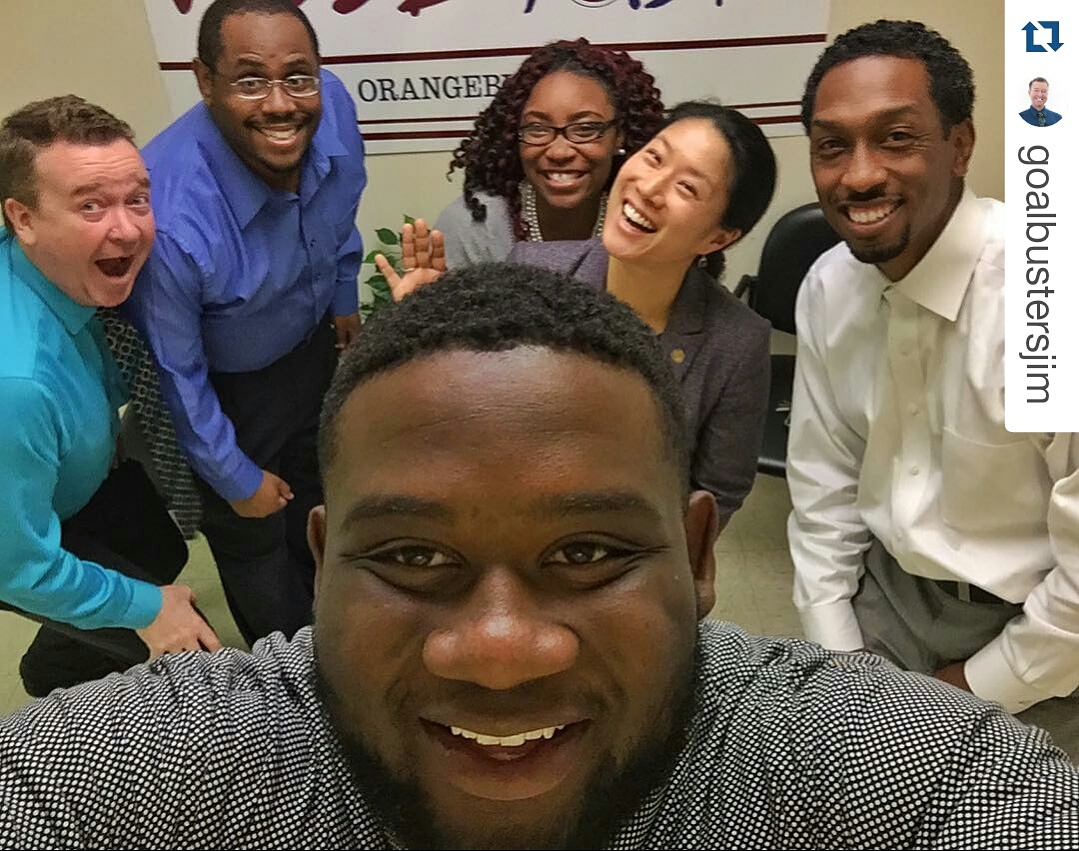
Jim and I and our friends at WSSB in Orangeburg, SC
Since the November 2016 election, people in public and community media have been speculating about the future of the Corporation for Public Broadcasting (CPB). This agency provides funding for public and community stations throughout the country through its Community Service Grant program and other special funding initiatives for infrastructure and collaborative projects.

Now, the Trump administration has announced its first pass budget that, to little surprise, zeroes out funding for the CPB, the National Endowment for the Arts, and the National Endowment for the Humanities.

I could go on about the politics of the elimination of funding. But not now. What I want to address is the very real impact of this potential loss on small, rural and minority stations.

First, an apology to my larger market station colleagues. I respect you and what you are doing to provide educational service to your communities. You invest local resources in Ready to Learn programs. You have some of the largest, and most under-resourced, teams of journalists in the country. You engage community leaders in civil discussion about local issues as wide ranging as racial profiling and restaurant reviews.

You will be fine.

CPB funding, for many large or medium size market stations, has become an increasingly small portion of their budgets. These stations may have survived elimination of other funding sources, such as state funding. Some have even explored what it might mean to withdraw from the Community Service Grant program. And I can confidently say that larger market stations have rallied their audiences to provide higher levels of voluntary support.

Some of my colleagues who have worked with only major market stations agree that eliminating funding to the Corporation for Public Broadcasting is a bad idea, but they are being practical. We can consolidate. We can raise the difference.

That's why I'm not really worried about you. I'm worried about the stations who can't do that.

The small but mighty KAWC team, 2016
(Steven Hennig is missing because he was taking the picture)
We work and have worked with small, rural and minority stations. We work with KAWC Colorado River Public Media, based in Yuma, Arizona, which provides two noncommercial programming streams to rural Arizona, including local coverage of real life on the border from a four person news team, and the only news service to some areas where cell phones still don't work.

We work with KGHR Navajo Public Radio, based at Greyhills Academy High School in Tuba City, Arizona, on the Navajo Nation, which serves as a community information board, sharing news about health fairs, home maintenance, public safety and other basic services that might otherwise go unnoticed.

We have worked in the past with KUYI Hopi Radio, licensed to The Hopi Foundation, one of the pioneers in Native American public media, which provides programming in the Hopi language and contributes to the protection and growth of the Hopi culture.

For all three of these stations, their CPB grant is a significant portion of their budget. It pays for programming that connects these remote communities to the rest of the world. It helps cover staff that keep the station running and provide a local voice. These stations are running with the bare minimum of staff to keep them going; the grant does not cover “fluff.”

In addition, these stations are not in communities with high resources. The idea of having the local audience bear the full cost is not realistic for these smaller stations. For instance, in a project funded by the CPB through Greater Public, we worked with four African-American licensed stations to try to build their local capacity for fundraising. Could we give these stations the tools to raise more money?

The answer, as you might expect, was “yes and no.” The stations did, to varying degrees, increase the amount of money raised, but not to the level of doubling or tripling their revenue. The communities that they served simply did not have the financial capacity to increase their giving dramatically. If faced with the loss of their CPB grant, they might be able to cut some expenses and generate a little more revenue, but not enough to continue.

So that begs the question...why do we need these small stations anyway? Wouldn't it be more efficient to just merge them into another larger station? Doesn't the internet provide the services these stations do? Couldn't we just have a national feed of NPR and PBS and call it done?

What would we lose if these small, rural and minority stations went away?

We lose the voices of these communities in national discussion. It doesn't work to ask people from these communities to go someplace else to share their opinions: that automatically makes them an outsider and immediately changes the nature of the conversation. We need to speak with people where they live to get their real perspectives.

We lose the connection within rural and small communities. Stations help residents in their communities stay connected. Particularly in radio, the station is often the only way to communicate with the whole community, not just about local events, but also about emergency situations. And the suggestion that everyone can get what they need through the internet? Well, internet access is not as universal as many in larger communities think, and what happens during a crisis when local internet might be down? In recent floods and hurricanes in the southeast, often the public radio or television station was the only source for updates.

We lose sight of issues that face people who live outside of metro areas. Let's face it: problems are different in major cities than they are in small towns and rural areas. For example, we are still dealing with getting cell phone service to some of these communities, when people in big cities complain about not having free WiFi. Stations have the ability to have issues moved to a larger stage that are simply foreign to metro audiences.

We lose the stories and rich histories of diverse cultures. You can't simply send a correspondent into a community for a day or two and expect them to understand the culture and way of life. There are so many stories that can only be crafted over time, and by someone who is a part of life there.

And we begin to ignore small, rural and minority communities and the issues that are important to them. By saying, “really, only large markets can have this service,” you tell people that they are not worth having a voice.

A colleague suggested that threats to federal support to public broadcasting might be a good thing for us. Like with the ACLU, the Southern Poverty Law Center, Planned Parenthood, and others, perhaps this is an opportunity for the public to rally and provide unprecedented levels of support. I worry that stations that really need the funding will not have the ability to access it.

Annie Lin (my mom), Mr. Rogers and me, circa 1971.
 I've been a public media supporter for a long time.
There will be much more discussion about this issue in the coming days, and, like in previous battles, I expect that many people will voice their support for public media. If you would like to do so, please visit Protect My Public Media to add your story. Also, contact your Representative and Senators regarding your position.


And find your local station and support them. They need all the help they can get.


We have worked with so many stations that deserve your support, but a special shout out to KAWC Colorado River Public Media, KGHR Navajo Public Radio, KUYI Hopi Radio, KXCI Tucson, Arizona Public Media, Arizona PBS, WSSB Orangeburg, WSNC Winston-Salem, WUVS Muskegon, KBBG Waterloo, Mountain Lake PBS, WGVU Grand Rapids, KCOS El Paso, Houston Public Media, KPFA Berkeley, WBAI New York, KNPB Reno, KUAC Fairbanks, and Wisconsin Public Television.

Sunday, June 20, 2010

Fundraising Through a Different Lens: Thoughts to Guide Philanthropy in Diverse Communities

Many well intentioned fundraisers have made a cultural misstep: you schedule a major event on a religious holiday, pick a menu that features food that is culturally taboo, or you make an assumption about someone's beliefs only to find out the hard way that you are very, very wrong. So how can you navigate cultural traditions, norms and unwritten rules when you are not a member of a certain group, yet you need to work with the group for fundraising?

1. Think about things you have in common with individuals within the community.
When we meet someone new, if you're good at getting to know people, you immediately start to try to find things that you have in common. But isn't it interesting, that when you consider groups of people, suddenly it becomes easier to find things you don't share? Instead of thinking about a particular culture as a group: Native American, African American, Chinese American, Jewish, Muslim, or others, begin with a single individual. Try to find common values and interests with that one person. Not only will this help with building respect for a potential donor's values, but also works to develop relationships that are critical to the fundraising process.

2. Find a "coach," advisor or trusted ally to help you within the community.
There are many factors that contribute to the definition of a culture, including but not limited to religious beliefs, traditions, geographic location, economic class, language, food, and much more. It can be very difficult to understand the layers of culture if you are an "outsider"--a transplant or an occasional visitor. Your advisor should be someone that you have gotten to know well enough that you can ask them the "stupid questions" without completely offending them. They should also be someone who believes in and trusts you enough to steer you away from the pitfalls and potholes! One of our trusted advisors is always good to point out without judgement when we've made a mistake. They also explain where we went awry. We value these learning opportunities and generally don't make the same mistake twice!

3. Take time to understand the "philanthropic currency" of the community.
While fundraisers are typically dealing with cash or cash based assets, we need to be aware that many diverse communities do not have a history of cash based philanthropy. In each group's culture of philanthropy, there may be traditions of helping extended family by providing a place to stay, or bringing food to a person who is sick, or coming with your horse to help with farming. In general, there is some tradition of helping others in every culture we have encountered, but in most, it is very direct and hands on. This is not to say that cash contributions don't happen in diverse communities--in fact, "minority" groups will become a majority proportion of philanthropic givers in the future as the makeup of our population changes. What you need to do, with the help of your advisor or coach, is understand what the culture's philanthropic currency is traditionally, and how you can translate those concepts to cash giving.

For example, in early Chinese American philanthropy, support was provided through "name houses," where any new immigrant with a particular family name could get help with housing, employment, communication, and more. So I could have gone to the Lin house to get help if I were just landing in the United States. Benefactors to these name houses were generally immigrants who had already established themselves. Points that you might glean from this tradition are that honoring the family name and making sure that the next generation is better off than the last are highly valued by this group.

4. Challenge your assumptions not only about other cultures but about yourself.
What misconceptions might other cultures have about you? Being aware of what assumptions others might be bringing to the conversation will also help with your relationship development. In my past, I've had people assume that I know how to speak Chinese, can beat up someone with karate, will generally be quiet and demure, will giggle with my hand over my mouth, and that I was not born in the United States--all of which are incorrect. (I've also had people assume that I was a good student, that I'm good at math, and that I can whip up a mean Chinese dinner, but those are true.) For Jim, working with Native American communities, others bring many assumptions about what the "pahana" (white man) will do. Assessing what misconceptions you may have to disprove will also help you navigate the culture.

5. Take time to build trust.
As much as I would like to say that there is a magic formula, there isn't. This won't happen overnight. Like other sustainable philanthropic endeavors, this will be an investment in a relationship that will evolve into support for your cause. It's not about changing what you wear, or translating your materials into another language--it's about understanding what a community values, finding advocates for your cause within the community, and building connections based on honesty and mutual respect.

Other resources about diversity in fundraising
This blog is an extension of my original essay written for the Association of Fundraising Professionals Kaleidoscope e-newsletter. Read the essay here.

Jay Frost writes a great blog, Frost on Fundraising. Here's his article on The Business Case for Diversity.

This blog was based on a session presented to the Association of Fundraising Professionals Southern Arizona Chapter in June 2010. One exercise was "Circles of my Multi-Cultural Self," which is available at Critical Multicultural Pavilion.

If you are interested in having this session presented to your nonprofit organization or association, please contact us at info@goalbusters.net or use the Contact Us link.

Labels

Alice Ferris (99) Jim Anderson (72) AFP (41) ACFRE (39) goalbusters (33) GoalBusters Consulting (31) CFRE (30) fundraising (30) Training (23) nonprofit (23) 100 days of gratitude (21) Association of Fundraising Professionals (18) Presentations (18) 100 days (17) 2009 (15) 2014 (15) AFP Conference (15) gratitude (15) AFPNAZ (14) Social Media (14) 2010 (13) 2013 (13) philanthropy (13) 2012 (11) Workshop (11) travel (11) 2011 (10) Flagstaff (9) How To (9) KAWC (8) Volunteer (8) arizona (8) thank you (8) 2008 (7) Facebook (7) Marketing (7) YouTube (7) 2017 (6) FAQ (6) Food (6) Public Radio (6) Storytelling (6) Tips (6) Video (6) LinkedIn (5) Lowell Observatory (5) Making the Ask (5) NFCB (5) Planning (5) Social Networking (5) Webinar (5) restaurants (5) rural fundraising (5) 2016 (4) Air Travel (4) Chinese New Year (4) Christmas (4) Donor (4) Hopi (4) KGHR (4) KUYI (4) Major Gifts (4) Native American (4) PBS (4) Planned Giving (4) Pledge Drive (4) Public Broadcasting (4) Public Television (4) SlideShare (4) Special Events (4) Stevenson (4) Video Production (4) board development (4) ethics (4) stewardship (4) 2015 (3) Arizona PBS (3) Brand (3) Canada (3) Capital Campaign (3) Chinese (3) Community (3) Development Staff (3) Donor Acquisition (3) Economy (3) Elf (3) Elves (3) Goals (3) HEEF (3) Haiku Deck (3) Health Care (3) Holiday (3) Jimisms (3) KAWC Colorado River Public Media (3) Manifesto (3) Mission (3) North Country HealthCare (3) Passion (3) Photography (3) Promotion (3) Research (3) Small Shops (3) Wisconsin (3) Year-End Giving (3) customer service (3) diversity (3) phoenix (3) prescott (3) resolutions (3) yuma (3) 2007 (2) 2020 (2) AFP TechKnow (2) Accreditation (2) Advancing Philanthropy (2) Alice's Restaurants (2) Baltimore (2) Books (2) Business Strategy (2) CFRE International (2) Chronicle of Philanthropy (2) Coaches (2) Commentary (2) Communication (2) Conference (2) Congress (2) Dancing (2) Dr. John H. Caskey III (2) Elta Foster (2) Foodspotting (2) Fundraising Campaign (2) Funny (2) Guiding Principles (2) Honor (2) Hopi Education Endowment Fund (2) House of Philanthropy (2) Humor (2) Immigrant (2) Jib Jab (2) KAET (2) NAU (2) Navajo (2) New Orleans (2) Partners (2) Plan (2) Press Release (2) Profile (2) Prospecting (2) Relationships (2) Respect (2) Resume (2) Reviews (2) Sanders (2) Schultz Fire (2) Singing (2) Strategic Planning (2) TechKnow (2) Toronto (2) Trust (2) Twitter (2) VIP (2) Values (2) Velvet Rope (2) Visionary (2) Vora Finacial (2) accountability (2) anniversary (2) appreciation (2) award (2) career satisfaction (2) change (2) checklist (2) code of ethics (2) crisis (2) crisis communication (2) cultivation (2) culture of philanthropy (2) development (2) development cycle (2) diverse communities (2) education (2) goal setting (2) habits (2) introspection (2) jobs (2) lapsed donors (2) las vegas (2) lessons (2) new year (2) personal (2) san diego (2) tripit (2) washington DC (2) 2019 (1) 30 day plan (1) 60 minutes (1) AFP Foundation Canada (1) AFP Meeting (1) AFPeeps (1) ALD (1) AWC (1) African American (1) Alexis de Tocqueville (1) Alpha Lambda Delta (1) Andrew Philips (1) Angry (1) Animoto (1) Anna LaBenz (1) Annagreta Jacobson (1) Apps (1) Arizona Daily Sun (1) Arizona University (1) Arizona Western College (1) Ask the Experts (1) Bequests (1) Bill Ferris (1) Blink (1) Bloomerang (1) Boot Camp (1) Boudros (1) Branding (1) Broadway (1) CAN-SPAM (1) CEO (1) CN Tower EdgeWalk (1) COVID (1) COVID-19 (1) CPB (1) Career Change (1) Case (1) Center on Philanthropy (1) Certified Fund Raising Executive (1) Charity Channel (1) Charlatans (1) Cheerleaders (1) Children (1) Chris Adams (1) Church (1) City Council (1) Cleveland (1) Cold Call (1) Colorado (1) Commission (1) Community Service (1) Compensation (1) Cook (1) Corporate Giving (1) Credential (1) Credentialing (1) Dan Coughlin (1) Data (1) Dating Game (1) Dave Tinker (1) Desert (1) Dharmesh Vora (1) Discovery Channel Telescope (1) Domestic Violence Shelter (1) Donald Sutherland (1) Donation (1) Douglas Adams (1) Downton Abbey (1) Dr. Carl Myers (1) Dr. William J. Rugg (1) EAA (1) Ed Renzi (1) Efficiency (1) Elevator Speech (1) Entrepreneur Magazine (1) Extraordinary Donor Journey (1) FM (1) FTC (1) Family (1) Fan Pages (1) Farm (1) Fast Food Nation (1) Feasibility Study (1) Feedback (1) Fight Club (1) Flagstaff Community Partnership (1) Flagstaff Shelter Services (1) Flood (1) Flowers (1) Food Bank (1) Foundations (1) Founders Medallion (1) Frances McAllister (1) Free (1) Fundraising Effectiveness Project (1) Gallup Q12 (1) Ginny Z. Berson (1) Girl Scouts (1) Giving USA (1) Global Philanthropic (1) Goldilocks Proposals (1) Granite Mountain Hotshots (1) Grant Writing (1) Grants (1) Grants Step by Step (1) Halifax (1) Hash House A Go Go (1) Hawaii (1) Healthcare (1) Hey Eleanor (1) Hiring (1) Hispanic (1) Homeless (1) Hopi Foundation (1) Hospital (1) Houston (1) IAIA (1) ICON (1) Identity (1) Ignorant (1) Immigration (1) In Kind (1) Indiana University (1) JC Patrick (1) JLB Project (1) January (1) Jetpack America (1) Jim Collins (1) Jimmy LaRose (1) KUAT (1) Kaleidoscope (1) Karla Williams (1) Ken Lain (1) KonMari (1) Kristin Taliaferro (1) KristinCoach (1) Latino (1) Lawrence Welk (1) Le Pavillon (1) Legacy (1) Living Social (1) Lodging (1) Los Angeles (1) Lotus of Siam (1) MIP (1) Mabel's on Main (1) Madison (1) Makeover Series (1) Malcolm Brett (1) Malcolm Gladwell (1) Margo Hudson (1) Marshall Rosenberg (1) Mary W. Black (1) Maslow's Hierarchy of Needs (1) McDonalds (1) Meeting Facilitation (1) Methodist (1) Mexican (1) Michael Nilsen (1) Middle East (1) Mike Geiger (1) Montessori in the Park (1) Mr Rogers (1) MySpace (1) NAFB (1) NANOE (1) NPR (1) NSU (1) NaNope (1) Nan Bain (1) Nepal (1) New York (1) News (1) Nietzche (1) Nonviolent Communication (1) Northern Arizona University (1) Organizational Readiness (1) Orlando (1) Oshkosh (1) Ottawa (1) PMDMC (1) PRPD (1) Pacifica (1) Pandemic (1) Parade (1) Partners in Recognition (1) Paul Helford (1) Philanthropist (1) Pittsburgh (1) Plenary Speaker (1) Politics (1) Porgy and Bess (1) Prezi (1) Proposal (1) Publications (1) Quentin Lee (1) Questions (1) Racial Profiling (1) Raku (1) Review (1) Rick Swanson (1) River City Grill (1) Riverwalk (1) Robbe Healey (1) Robert Kiyosaki (1) Ronald McDonald House (1) Rose Marie Ferris (1) SB1070 (1) SEO (1) SWOT (1) San Antonio (1) Saskatoon (1) Scottsdale (1) Service (1) Serving Your Community (1) Shared History (1) Soroptimists (1) Speaker (1) Sponsors (1) Sponsorship (1) Spring (1) Stephen Hawking (1) Stereotypes (1) Strategic Thinking (1) Super Size me (1) Suze Orman (1) Sweets Raku (1) Taco Trucks (1) Target Marketing (1) Team (1) Teamwork (1) Television (1) Teri Sanders (1) Texas (1) Thanksgiving (1) Tim Burcham (1) Timothy Sandoval (1) Toolkit (1) Tough (1) Tough Economy (1) Train (1) Tucson (1) Tweets (1) United President's Club (1) Vernon Kahe (1) WBAI (1) Watters Garden Center (1) Whitney Anderson (1) WikiHow (1) Wills (1) Winnipeg (1) Wisconsin Public Television (1) Women's March on Washington (1) Woodford Reserve (1) Yarnell (1) Yarnell Fire (1) Year in review (1) Year of the Sheep (1) Yellow Pages (1) accidental fundraiser (1) administration (1) adventures (1) assessment (1) astronomy (1) beliefs (1) birthday (1) board of governors (1) board service (1) breaking up (1) brochures (1) budget cuts (1) business practices (1) career (1) career development (1) cats (1) cliques (1) community radio (1) conversations (1) difficult people (1) dinner parties (1) donor focused (1) donor pyramid (1) election 2016 (1) end of relationship (1) essay (1) executive director (1) federal funding (1) firefighters (1) for profit (1) high school (1) hotels (1) ikigai (1) inspiration (1) jetpack (1) job seeking (1) keynote (1) leadership (1) lemons (1) loss (1) mentoring (1) millennials (1) monthly giving (1) motivation (1) multicultural (1) nomination (1) oklahoma city (1) organizational culture (1) outstanding professional (1) peoria (1) personal growth (1) potlucks (1) productivity (1) receptions (1) recognition (1) red flags (1) remembrance (1) sales (1) san francisco (1) scholarships (1) science (1) setbacks (1) star thrower (1) starfish (1) sustaining members (1) tempe (1) thirtysomething (1) three cups of tea (1) to do (1) transformational (1) vlog (1) volunteers (1) wildland fire (1) winslow (1)