This is our soapbox

This is our soapbox on philanthropy, fundraising, the charitable sector, and the world. For more information, visit GoalBusters.net or call 888.883.2690.

Saturday, May 16, 2020

Are you an Accidental Fundraiser?

Jeff is our favorite Accidental Fundraiser.

As the Director of Lowell Observatory, Jeff Hall didn't intend to become a fundraiser. He has a B.A. in physics from Johns Hopkins and a Ph.D. in astronomy and astrophysics from Penn State. He joined the staff at Lowell in 1992 as a postdoctoral research fellow, probably intending to spend the rest of his career studying solar phenomena.

But over the years of his career evolution at Lowell, he became a fundraiser. And a pretty darn good one at that.

We're going to periodically have conversations with Jeff about his path as an Accidental Fundraiser and various topics from his perspective as the director CEO of a nonprofit business. Please subscribe to this series on our YouTube channel and here.

Episode 1: How Jeff became a fundraiser


Summary and transcript

Alice: Hello, and welcome to the GoalBusters YouTube channel and video vlog series, and our first ever Accidental Fundraiser vlog entry. You may be wondering what the heck is an accidental fundraiser, and that's what today's episode is all about. It's about figuring out what that is. I'm Alice Ferris. I'm the founder of GoalBusters Consulting with me is Jim Anderson, partner of GoalBusters. And the accidental fundraiser himself, Jeff Hall. Hi, Jeff.

Jeff Hall: Hi, Alice. How are you?

Alice: Good. Great. Thank you so much for joining us.

Jeff: Always a pleasure to join you and Jim.

Alice: We tease you because we call you the accidental fundraiser because, in real life, you're the director of Lowell Observatory. You're also a Ph.D. in astronomy, but you also happen to be, frankly, a kick-ass fundraiser. So, how does that happen? How did you become a fundraiser?

Jeff: It was this gradual evolution. I've been at Lowell since the late Cretaceous! I came here in 1992, as a dewy-eyed postdoc, fresh out of grad school on a three-year research appointment entirely funded under an NSF grant. But the nature of that research program is very long term. So we got the grant renewed in 95. Then in 98, got it renewed again. At that point, the director, Bob Millis, asked me if I would take over managing the outreach programs because I enjoyed outreach. So then I was 50/50 [between research and outreach]. Then, I started meeting with the occasional donor to talk about my research and got more involved in fundraising. Then, I became the project scientist for our huge new telescope and gradually sank deeper into the molasses, you know. At the end of 2010, I was appointed the Observatory's director. And at that point, you know, we were no longer the little observatory I came to in 1992, when we had maybe 40 or 50 employees. All of a sudden, we had 100, and we had added a $53 million asset to the balance sheet in this new telescope. So yes, we're still an observatory. But we are now a full-fledged, nonprofit business specializing in astronomical research and communicating that to the public. So I'm a nonprofit CEO, in addition to being an astronomer, and we all know what nonprofit CEOs have to do a lot. And so I've ended up doing a lot of fundraising because we have a lot of ambitions and a lot of generous donors and loyal supporters. You have to go out and talk to them and inspire them about the mission, and it's a lot of fun.

Jim: Was it always a lot of fun? Did you always enjoy it?

Jeff: No, no, it was definitely an acquired skill. Because early on, it was, "I'm going to sit down with people and asking them for their money?" And it was uncomfortable, especially when you were talking about planned gifts, and sitting down with people to talk about that. I practically felt like I should have my big black robe and a sickle. But you know, over the years, I've learned that that is entirely not the case. And it's a very enjoyable and incredibly honorable thing to be able to do.

Jim: That's an interesting pair of words. What makes it enjoyable? Why do you think it's honorable?

Jeff: Because you get to go (well, when we can go all over the country) all over the country and meet the most interesting people who are so genuinely interested in astronomy. And sometimes you don't even get to talk about the fundraising pitch because they're just peppering you with questions about the universe. Then I get to be an astronomer again for a little while. It's honorable, I think, because...well, let's go back to the planned gift. You both knew Don, and he left us virtually his entire estate after a terrible decline and death from bone cancer. I was able to visit him a few weeks before he died and show him pictures of the facility he had endowed. It was a deep honor to be able to bring him happiness and that the kind of joy that he saw that his gifts were bringing us in the final weeks of his life. And that is a privilege to be able to do that.

Alice: You know, it's interesting you mentioned Don because, as you did say, we both knew him. And in fact, he became a donor of Lowell Observatory way back in the Cretaceous when I was the development director for Lowell Observatory. The thing that I appreciate about him was that, many years later, when I had the opportunity to interact with him at an advisory board meeting, he came up to me and said, "Alice, you may not remember me." I'm thinking, are you kidding me? He was my first major donor! So I was like, "of course, I remember you." And he said, "I want to thank you." I said, "Why do you want to thank me?" He said, "Because you helped connect me with this organization. And I've had just a wonderful experience being part of the Lowell family. And, and I want to thank you so much for making me a part of this." I started to cry. And it's totally that human connection that you make with people.

Jeff: Absolutely. And we were his family, you know. He was a lifelong bachelor who would very loyally come to all the board meetings and interact as much as he could. And it was always nice to go up to Seattle and see him.  So yeah, you realize, after you gain some experience, meet with people and hear what they want to do, it's not like you're picking their pockets. It gives them joy to help you. [Fundraising] is empowering them to do something very meaningful to them. And that's just really fun.

Jim: I can't think of any better words of encouragement for those people who might be accidentally fundraising and who may still be at that point where it's a little uncomfortable. So what you shared is how you're not asking somebody to do something they don't want to do. In most cases, if you're talking to them, they've already made the decision. They want to help you. You're just helping them figure out how they can do it.

Jeff: Right. And what's the best way. That's one of the fun things about doing this at Lowell because we do all these research programs, outreach, historic preservation, capital projects, and every donor is a little bit different. Some people love to support the science, and others really want to enable us to reach lots of kids in the outreach programs. It's nice to have this menu that you can roll out in front of them.

Alice: Well, that's great. And thank you, Jeff, for taking a few minutes out of your very busy and very Zoom-y day.

Sunday, April 26, 2020

What We Should Really Fear Right Now


Nearly everyone on the planet is currently a part of something that has already changed the world. The global experience of the COVID-19 pandemic is something everyone is sharing. It is changing our communities, our culture, and each of us individually. The world we return to will not be the same as the one we had. Some of those changes will be painful, and others will improve our world. Not everyone sees that. I’ve been thinking a lot about how different people are coping with their circumstances. I’ve also been angry about how unethical people are profiteering and fearful about how others are using this crisis as an excuse to take actions they’ve always wanted to take.

A few years ago, I was confronted with an organization that I felt was taking improper advantage of inexperienced fundraisers, specifically targeting those working at religious organizations. While I am not religious myself, I thought that this was unethical. Their actions seemed purely profit-driven, cloaked in philanthropy. It led me to coin one of my “Jimisms” which is a thought or concept I have that becomes a regular saying or quote. This one was, “The only things nonprofit organizations have to fear are the charlatans, the ignorant, and the angry.” I’ve thought about that a lot as I’ve seen people reacting to or using the COVID-19 crisis for personal benefit.


During this crisis, nonprofit fundraisers should be fearful of the charlatans. These individuals are profiteering off of the fear people have during this stressful time. Every person who becomes the victim of someone selling false cures or solutions loses a bit of trust, and that will harm all of us. Trust is the most important relationship we have with our donors. If they are trusting less, our work will be increasingly difficult.

The ignorant in this situation are those individuals who genuinely don’t understand what we are facing and who want to immediately force us back into risky activities that will lead to
further infections and deaths. The ignorant are also those who do not understand how a nonprofit organization works. They might think that you should work only as a volunteer. They do not know that each nonprofit is a business; instead of profits going to the few in power, financial gains are invested in the organization. Of course, there are exceptions to this. Some unethical people are running nonprofit organizations. But for the most part, the vast majority of money raised is reinvested in serving our communities.

Finally, we have the angry. They are furious about, well, everything. They are angry that their regular routines are disrupted. They are angry because they have to follow “someone else’s rules.” They are angry because they often perceive that some in our society are getting a free ride while they have to work so hard. They also tend to be very selfish and do not understand service or philanthropy. 

The three groups of people I just described were probably very much like this before COVID-19. A person doesn’t become a jerk because of a crisis. However, those emotions and attitudes are being amplified and revealed more clearly.

I’d like to add one more thing nonprofit fundraisers should fear. That is the people in decision making positions who are using the challenges we are facing as an excuse to take actions they wanted to take in the first place. They are using the crisis as a shield to fire or furlough people, to cut services and benefits, or to close facilities. These actions may be genuinely required in some circumstances. But I have already seen many examples of people taking such steps when they are not necessary. That person merely desires them. Anyone who falls into this category and makes such decisions is quite unethical and bordering on morally corrupt.

While there are a lot of concerns, fears, and uncertainties at this time, I’m optimistic that the kind, generous and compassionate people in the world far outnumber the “charlatans, the ignorant and the angry.” You just have to do your part to help some find the confidence to prove it. Remember, “you should be fundraising now!” If your mission was valuable to the people you served before this crisis, it is likely more important now. People need arts, social service, mental health, a clean environment, and all the other types of nonprofit organizations. If they loved you before, they love you now. If you serve people, pets, or the planet, you are providing an essential service.

Monday, March 2, 2020

Alice Ferris to Receive Founders’ Medallion From Largest Community of Fundraisers in the World


Alice Ferris, ACFRE, CFRE, MBA will receive the AFP
Founders’ Medallion at AFP ICON in Baltimore on March 29th

The Association of Fundraising Professionals (AFP), the largest community of fundraising professionals in the world, will honor long-time fundraiser Alice Ferris, CFRE, ACFRE, with its Founders’ Medallion for her extraordinary contributions to the organization and the fundraising profession. Congratulations Alice! We are so proud of you!

(Reprinted from the AFPGlobal.org)

(Arlington, VA)  The Association of Fundraising Professionals (AFP), the largest community of fundraising professionals in the world, will honor long-time Arizona fundraiser Alice Ferris, CFRE, ACFRE, with its Founders’ Medallion for her extraordinary contributions to the organization and the fundraising profession at its upcoming international conference, AFP ICON 2020, in Baltimore, Md.

The AFP Founders’ Medallion is presented to members who, through their dedication to the principles of ethical and effective fundraising, honor the legacy of AFP’s founders: Harry Rosen, Benjamin Sklar, Abel Hanson and William R. Simms. Recipients must have been members for at least 20 years, served with local chapters and at the international level, and worked to foster the development of the profession and the fundraising community throughout their careers.

Ferris is the founding partner and chief executive of GoalBusters, a consulting firm in Flagstaff, Ariz., focusing on small nonprofits. Through her consulting firm, she is currently supporting fundraising activities for KAWC Colorado River Public Media and Border Radio in Yuma, Ariz., the Experimental Aircraft Association in Oshkosh, Wisc., and Lowell Observatory in Flagstaff, Ariz., among others.

Prior to launching her consulting firm, Ferris served as director of development and similar positions for a variety of organizations, including Lowell Observatory, Flagstaff Medical Center and KNAU Arizona Public Radio, all located in Flagstaff. At each organization, she vastly increased membership and fundraising numbers, such as leading KNAU to its first $1 million fundraising year.

Ferris has more than 30 years of affiliation with public broadcasting and has appeared on numerous public television and radio pledge drives, including national PBS fundraisers for Downton Abbey, Ken Burns: America’s Storyteller and Suze Orman’s Financial Solutions for You.

"It was a total shock to get the call from AFP President and CEO Mike Geiger asking me to accept this honor,” Ferris said. “Honestly, I thought he was calling me to serve on a task force to select the next recipient! AFP has been such an ingrained part of my professional identity for so long that it has always felt natural for me to volunteer and give back. The list of members who have received the Founders' Medallion includes people whom I consider part of AFP's fabric, and whom I respect as fundraising trailblazers and change-makers. And, luckily for me, a few of them I consider mentors and friends. I'm sure that they, like myself, did not commit to service to AFP and the profession for the recognition—my volunteerism is an inherent part of my calling to be a fundraiser. So this is an unexpected privilege and a gift."

An active volunteer with AFP for decades, Ferris has served as president of the AFP Northern Arizona Chapter on three separate occasions over the last twenty years—as well as every other chapter position, including multiple times as chair of the AFP Arizona State Conference. On the international level, she was on the board of AFP Global for eight years, including two years as vice chair of member and chapter services. Over the years, Ferris has held leadership roles in all areas of association operations, including credentialing, awards, membership, chapter development and fundraising.

Ferris was the 90th professional to receive the Advanced Certified Fund Raising Executive (ACFRE) credential, the most rigorous certification process available to professional fundraisers and which has only been conferred to 114 fundraisers around the world. She is also a three-time recipient of the Northern Arizona Chapter’s Fundraising Professional of the Year award.

“When you think of service and AFP, Alice Ferris comes top of mind,” said Mike Geiger, MBA, CPA, president and CEO of AFP. “She has contributed so much to AFP over the years, and her efforts have improved so many different aspects of our association and the community of fundraisers worldwide. This honor is so well deserved, and on behalf of the board and staff of AFP, I want to thank her for everything she has done for fundraising.”

Ferris earned her Bachelor of Arts with a double major in Radio-TV-Film and Economics and her Master of Business Administration with a double major in Accounting and Management from the University of Wisconsin-Madison. She obtained her Certified Fund Raising Executive (CFRE) in 1999 and is certified through 2020. She received her ACFRE in 2010 and has been an AFP Master Teacher since 2006.

The 21st AFP member to receive the Founders’ Medallion, Ferris will receive the honor during the Opening General Session of AFP ICON 2020, the largest gathering of fundraising professionals in the world, March 29, in Baltimore, Md.

#####

Sunday, May 26, 2019

Ikigai and the Modern Fundraiser

Cute, but not a way to live.
I love my work. Really, I do. 

Like me, most of my friends who have made fundraising a career like their work overall. But I see far too many of us scampering on the big hamster wheel, trying to keep up with the continual demands of the charitable sector. There's always another budget number to hit, another event to manage, another proposal to write, and "other duties as assigned."

Beth Kanter and Aliza Sherman's book, The Happy, Healthy Nonprofit: Strategies for Impact without Burnout, highlights some incredible stories of how badly things can go when nonprofit professionals ignore self-care. Yet we continue, as a sector, to emphasize that our passion and drive to change the world is enough.

While there are a lot of discussions about finding "your why" and focusing your passion, in reality, it's not just about that. To make a sustainable difference in the world, we need to take care of ourselves.

In Japanese culture, there is a concept called ikigai, loosely translated to "your life's purpose." If you Google this word, you'll find many articles about applying this concept to your life, including this one on Medium


Illustration from Toronto Star
The basic idea of ikigai is that to feel fulfilled with your life's purpose, you need four spheres in balance:

  • What you love to do
  • What you are good at
  • What the world needs
  • What you can be paid for

If you are able to do what you love, and you're good at it, you are pursuing your passion.
If you are able to do something you're good at, and you can get paid for it, you've discovered your profession.
If you can be paid for something that the world needs, you have a vocation.
If you are doing what the world needs, and you love it, you have your mission.

I've been presenting on this topic for the last year and struggling with it personally for much more than that. When you're thinking about your life's purpose, what's missing for you? What sphere is out of balance?

I've been using several tools over the past few years to work on my personal sense of ikigai. I'm writing a series of blog posts in the coming weeks to highlight each tool and provide tips on how to work on your own ikigai. To be notified when the next post is available, subscribe to this blog on the right, or follow us on Facebook or Twitter.

Friday, September 28, 2018

Lessons from an Extraordinary (Donor) Journey

The #DonorJourney Crew, clockwise from top left:
Guy Mallabone, Sue McMaster, Jenny Mitchell, Stephen Pidgeon
"Do you have time for a quick call? I have a time-sensitive item to discuss with you."

This short message from Guy Mallabone was the start of an adventure that brought me to Halifax, Ottawa, Toronto, Winnipeg and Saskatoon. All in five days.

The Extraordinary Donor Journey, presented by Global Philanthropic Canada, brought together Guy Mallabone and Sue McMaster from Calgary, Jenny Mitchell from Ottawa, Stephen Pidgeon from the UK, and me, the token American, for a curated conference for non-profit organizations across Canada. When we convened in Halifax, it was like being at the start of a school trip--you don't know most of your group well, and you certainly haven't traveled with them!

The pattern began: present the program all day, pack up the stuff as quickly as you can, take transportation to the airport, grab dinner, fly to the next city, slog on to the hotel, rinse, repeat.

Five days. Five cities. What could possibly go wrong?

Everything did not go perfectly. But thanks to the adaptability and team spirit of our mighty band, we thrived and, I think, came to truly care about one another in a short period of time.

While I learned many things from the program content of my fellow presenters, my strongest takeaways are from behind the scenes....
  • How you think about money affects everything. I am grateful that Jenny shared the Sacred Money Archetypes model in her session. Jenny's explanation was, "If money were someone standing alongside you, what kind of person would it be?" Would it be supportive? Judgmental? Petulant? Rebellious? What the conference participants didn't know was that Jenny had all of us do the quiz at the start of the journey. Initially, our call backs to our archetypes were opportunities to tease Guy, but as the week evolved, I found that the context of money mindset was useful in understanding each other and our values.
  • Trust begets trust. In reality, we didn't know each other well at the start of the week. It would have been easy, and expected, to be guarded until we got to know each other. Guy set the tone early, however, because of an unexpected family situation. He had to let down his guard and trust us. His ability to persevere under difficult circumstances led us to not only to deepen our connection with Guy, but with each other. This led to open and fulfilling conversations that I had with each of my colleagues, and I am better for it already.
  • If at first you do succeed, try, try again. Halifax was the first time any of us saw the others' presentations. While the core parts of each of our presentations was the same in each city, we thrived off of drawing from each others' content and making small improvements from city to city. In many respects, we were accepting Stephen's call to focus on "the concept"--how can you think sideways to get at the core message? The chance to refine the same presentation every day for a week was a great way to challenge myself.
  • It can be rewarding to be a sherpa. There's a lot of stuff involved in presenting a conference! At first, Guy carried all the banners and Sue carried all the other materials, but those barriers broke down relatively quickly. Pitching in and helping where needed felt far more rewarding than just watching others do the heavy lifting. By the end of the week, we were "Global Philanthropic sherpas," and proud of it!
As I write this, I'm still in Saskatoon; most every one else has gone home. I am exhausted, but grateful, for the opportunity to spend time with some amazing people. I've learned so much in five days, and hope to have a chance to do this all over again. To Sue, Guy, Stephen, Jenny, James, Steve and Jeff, thank you for an experience I won't forget.

Wednesday, August 29, 2018

Who "Owns" the Right to Talk about Diversity?

Girl Scouts: I'm the one with the excessive number of badges
I was born in Beaver Dam, Wisconsin, to immigrants from Taipei, Taiwan. (How my parents ended up in Beaver Dam, "Home of 16,000 Busy Beavers" according to the sign that was unfortunately taken down in the 90's, is a story for another time.) When Jim bought me an Ancestry.com DNA test as a Christmas gift, my report said that I was 93% East Asian (Chinese) and 7% Pacific Islander, tracing to Taiwan. Needless to say, I am definitely Asian.

While I am genetically very Asian, however, I grew up "ABC"--American Born Chinese. I am basically a girl from the Midwest who grew up and continues to live in communities without much of an Asian population. To paraphrase John Maeda from his 99U interview, I'm a Type O minority. I can go anywhere.

Yet over the years, I've been the one who is supposed to understand "all things diversity."

I've been the token person on a committee or board who is supposed to represent "minorities." I have been asked to speak on diversity issues, specifically, Asian American giving, even though I don't know much about Asian American giving. I've been disqualified for a role because they already have a person from a diverse community and they don't need another.

Since I live in Northern Arizona, where there are far more Hopi and Navajo people than Asians, I've had the privilege of working with several Native American led nonprofits. In many respects, I've come to learn more about Native American philanthropy than Asian American giving. But if I speak about my experiences with my Hopi and Navajo colleagues, does that mean I'm "co-opting" their culture? Or if I speak about Hopi and Navajo culture as an Asian, it's okay, but if my white male colleague does, it's not?

I am incredibly bothered by some people's militant approach to important issues around race, ethnicity, gender, sexual orientation, and other diversity factors. I worry that in our zeal to affect change, we are far too quick to disqualify people who can and want to raise up others.

I'm guilty of this sometimes too. Case in point, I was one of the members that was skeptical when nearly one year ago, Mike Geiger was announced as the new President and CEO of the Association of Fundraising Professionals. Like some others, I thought, "Great. We talk about diversity, but we hired a white male?"

But then I had the chance to meet him, and talk with him, and listen to his ideas about addressing diversity, inclusion, equity and access. In less than a year, he has demonstrated a commitment to productive conversations about diversity, and has been a true champion.

Celeste Headlee, author of We Need to Talk: How to Have Conversations that Matter, wrote, "Imagine how presumptuous it is to enter a conversation...to educate someone else about their biases when you are unaware of your own." Assuming that someone has to be a person of color, or LGBTQ, or female, or some other factor to "qualify" to talk about his or her personal experiences with a diverse culture is flawed. We want to have conversations, not cut them off.

Posted on my computer is a quote from Daniel Pink: "Assume positive intent." And I do believe that some people who frustrate me do have a positive intent to enact much needed change. Through LGBTQ advocacy, the Women's March, #MeToo, Black Lives Matter, and many other grassroots movements, we are gradually, finally, giving voice to people for whom it is overdue. But vilifying people when you haven't listened to their story, or just because they are not visibly "diverse," is counterproductive. What's important is to listen and respect each other. We must have conversations that matter to get change to stick.


Monday, September 18, 2017

"Little Things" Can Make a Big Difference.

Living a "single serving life."

"Everywhere I travel, tiny life. Single-serving sugar, single-serving cream, single pat of butter. The microwave Cordon Bleu hobby kit. Shampoo-conditioner combos, sample-packaged mouthwash, tiny bars of soap. The people I meet on each flight? They're single-serving friends." - Fight Club, 1999

I travel about 170 days each year. I live a single serving life on the road. From the tiny packets of salt and pepper served with a "hobby kit" meal on a plane to the little bottles of shampoos and conditioners in each hotel I call home for a night or two. And if I don't use these single service amenities, I take them with me.

Why?

It's natural to simply assume I'm cheap. Well, I prefer the term frugal. But when I take most of these things home it's with a clear understanding I will never use the items I've stowed in my luggage.

What's better than collecting all of these free, small personal hygiene products from the hotels I frequent? Giving them away to someone who might need it more than I. Someone who wishes they could spend a night in a room like the one that body wash came from. I carry home my bounty, I put it in a box, and when the box is full I take it to a homeless or domestic violence shelter. I did that today.

On the Flagstaff Shelter Services "Get Involved" webpage, they have a listing for "Shelter Program Needs" and ask for Hygiene supplies:  toothpaste, toothbrushes, dental floss, razors, deodorant, lotion, lip balm, shampoo, soap, etc.

I delivered this (and more) to them today. It shook me. It has shaken me each of the many times I've made donations or volunteered at this and similar organizations. My day, my night is unlike that faced by my homeless neighbors. The night they face terrifies me.

As I drove towards the shelter today, I saw something I've seen before. It always makes me uneasy.

It was just after 3:00 pm. The shelter opens at 4:00. For many blocks I counted people walking to the shelter. Four couples, three single men, one man helping, but not "pushing" a woman with one leg in a wheelchair. This is a "ritual" each day as the clients who aren't allowed to stay in the facility return for a meal and roof over their heads for the night. It's September 18th. The Weather Channel forecasts temperature in the low 40s tonight. Not a good night to be sleeping outside.

As I approached, there were two police SUVs strategically parked on either side of the shelter about a block apart. I was cautious as I approached the vehicle. I slowed. I stopped. I slowly waved to get an officer's attention. I was probably safe. I'm white and over 50. Geez, it hurt to say that out loud, the over 50 part. The officer was standing in the open door of his vehicle pinching his shoulder radio to talk to the other officer in the distant SUV. As I waved for the third time, the officer looked at me with boredom or acceptance or relief and waved me through. It appeared as though they were done with whatever the issue was. Both vehicles were gone by the time I parked.

Before I parked I passed by the shelter and did a U-turn. There were dozens of people in the shade on both sides of the street. It's Arizona. The sun is merciless and cruel. 

I parked near the front of the anonymous building and made my way up the driveway to an open door adorned with caution tape. It looked like it was recently broken or damaged. I've never entered this way before. I usually go around back and enter through their "processing" entrance. This wasn't really an appropriate entrance for me. I didn't know the door was only open for ventilation. I just walked in an open door before I realized where it led. I stepped into the "bedroom barracks."

I walked through rows of bunkbeds with personal items on them, clothing mostly, but some with a toy, or a totem on something that created ownership, that branded the space. I was embarrassed to have invaded their space. I felt awkward. I had just stumbled into the bedroom of scores of strangers. That's not cool.

I entered an open, common area and saw a few clients who apparently didn't have to clear the facility during the day. I assumed that they provided services or assisted in running the facility or had special needs.

A man told me Chuck was the guy I should speak to. I greeted Chuck and explained that I would like to make a donation of "a somewhat large quantity of hotel toiletries." He replied "That is great. People love those small bottles. They're easy to travel with." (I call them "pocket portable.") When Chuck commented "Our clients love the small items," a elderly woman grinned ear to ear and nodded vigorously as she pushed her walker across the room.

Her enthusiastic smile motivated me to write this blog, and to start my next box of "single serving" donations.

Chuck and I walked to my car. I offered to carry the larger box and asked Chuck to grab the five or six additional bags of toiletries that didn't fit in the box. We came back through the bunkbeds. He wrote me a receipt and walked me to the door.  I shared with him that I collect these items as I travel and I think of who I'm bringing them home for.

I shared I have great compassion for people experiencing homelessness because I was briefly one of them. It was terrifying. I know what it's like to sleep in bed of my pickup truck, parked in the forest, eager to get up and go to a job interview. I pretended I was just camping. I almost fooled me. I know what it's like to shave and wash up in a Burger King bathroom before going to a nearby job interview. Luckily for me, I got that job. But it wasn't easy for the next few years as my ex and I worked our way through college with two young children.

I support Food Banks because I needed their support to feed my family at one point during college. We supplemented our groceries with government cheese and oats and the generous donations of others for a while. My children and I have used medical aid programs. I've collected unemployment checks and used food stamps.

The food stamps were so embarrassing. You know how your ignorant uncle ridicules foreign currency as "Monopoly money" because it's not all the same size and not green? Yeah, I tore my coupons from my monthly book and I used that "funny money" to buy milk and eggs for my kids. I tried to shop late at night so no one knew I needed help to feed my family.

All of my life I have had family and friends who have needed support from government programs. I guess we're socialists. Either that or we believe in helping those in need. Some say these programs are abused by lazy criminals. Fraud? A little, but that fraud is a tiny fraction compared to the millions of people the programs help. Most people do not want to go through the stress and indignity of completing the applications, interviews and reports required to get these benefits. You are "required" to prove you deserve help. That stings. It is humiliating. Most people only use these programs for a limited time. Then they are paying back into the programs for the next person who needs the services.

All I did was collect soap, shampoo and shaving cream then deliver it to a shelter for people who may need to clean up in a fast food restaurant bathroom before an interview, like me. It may help someone in a small way.

I'll keep collecting those "single service" items and passing them along. It's the least I can do.

There are other ways you can help

Please consider supporting those with less by choosing a nonprofit, charity or social change organization of your choice.

Cash is always valued but you can make an impact with a non-cash contribution as well. Alice and I discuss non-cash giving concepts in our "House of Philanthropy."

4 Non-cash ways to give.

Transaction - Buy something from them. It's the same as donating cash.

Volunteer - Just show up. Carry your bucket of water.

Service - If you have a skill, talent, or service provide it.

Goods - Give something that can be sold or would otherwise be purchased by the organization. Expense savings often equal cash donations.

Is there something you could do today that might help?


Thursday, April 6, 2017

"Do I Have To?" No One Really Likes Your Donor Cultivation Events

I heard the most refreshingly honest thing from a significant donor the other day.

"Please don't invite me to another dinner party."

As a charitable sector, we plan a lot of donor cultivation events. We know we need to connect with our donor base. Inevitably, we think of things from OUR perspective: it would be so much easier if we could organize a small event and invite our best prospects. That way we can talk to all of them at once!

Have you ever stopped to consider that your donors may not like these events and come in spite of that?

Think about it. You've been invited to an event where you don't know if you'll know anyone, you don't know if you'll like anyone, and you might get stuck with someone that talks your ear off about something you don't care about, or worse, don't agree with. The food will be lackluster, the drinks will be cheap, and you'll lose an entire evening over it.

So let's think about this from the donor's perspective. What does the donor want?

Customized attention
It doesn't need to be one-on-one, per se, but your cultivation activity does need to reflect the interests of your donor or prospective donor. Ask them what they want to do to deepen their engagement. For some, it actually might be a dinner party. But for most, it will involve some kind of customized VIP experience.

Don't say "no" for them
Maybe you think that your idea of how to deepen the relationship is too much time for them, too arduous a request, too daring, or too tame. Don't automatically toss out the idea--ask the donor what they think. You never know when they might say, "Wow, I've always wanted to do that!"

Respect their time
That said, respect how much time they have to give to you. If they can only commit an hour, create an experience for an hour. It's better to schedule a return experience than leave them bored and frustrated by how much time this took.

Have them truly experience your mission
Whatever you do, make sure it connects somehow with your mission. In fact, that may be why your donor doesn't want to attend your reception or dinner party: it's so removed from what they think your mission is, that it's of no interest.

Listen
Above all, listen to their needs. It doesn't matter what YOU want to do, if it's not what the donor wants.


Thursday, March 30, 2017

Ms. "Ethics Matter" Appointed to NANOE's Board of Governors

By Jim Anderson, CFRE

Ms. Ethics Matter's
NANOE "Press Release"
I was quoted today in an excellent article/expose published by the Chronicle of Philanthropy. The article,  "New Nonprofit Puts Money Over Mission and Ethics" was written by Timothy Sandoval regarding what many consider the unethical business practices and self-serving fundraising philosophies of an organization who calls themselves the "National Association of Nonprofit Organizations and Executives" (NANOE). In the article the "founder" of NANOE, Jimmy LaRose calls me a liar. I view that as an invitation to prove that my experience and my story are true.

In the article I explain what I view as deceptive and misleading business practices employed by NANOE. If you are or have ever been on a fundraising organization's mailing list you have likely received NANOE's "spam" communications or text messages proclaiming with grandiosity that you have been "nominated" for "appointment" to their "Board of Governors." Sounds pretty special, doesn't it? It's not. You haven't been "nominated." It appears they acquired your email address "somehow." I think that "acquisition" is very shady. But we'll save that for another blog.

Here's my proof that "you" were probably never "nominated" by anyone.

Tim at the Chronicle contacted me for an interview and I shared that I believe NANOE is in violation of the FTC's CAN-SPAM Act and that those flowery, flattering emails they send to "everyone" are intended to trick trusting fundraisers into believing that they have received a legitimate nomination to a prestigious board when in fact it's an automated process with no one actually nominating the recipient and no one looking at the submitted nominations before automatically sending the "Press Release" announcing their appointment to NANOE's "board of governors."

I explained that I have personally accepted multiple NANOE nominations that were NEVER OFFERED using fictitious names and new email addresses. I did so to test my assumptions that this was just a reprehensible, deceptive marketing tactic that was part of a broader money making scam attempting to mislead the unsuspecting. Like everyone, I hate spam. And, I really hate deceptive business practices and purposefully misleading marketing tactics.

Tim shared my story with Jimmy and asked if it was true that "anyone" could sign up with an email that had only existed for minutes and instantly be accepted as a member of NANOE's Board of Governors. Tim called me back two days ago on Tuesday, March 28th and told me Jimmy claimed that my story was impossible, nominations are specific to the individual and the button to accept "NANOE Nominations" had been removed "some time ago."

I knew that was untrue. I had already been "appointed" to their board of governors using a fictitious name and brand new email address. And I still had their web page open in my browser. I hadn't refreshed their page in a few days. The accept "NANOE Nominations" button was still on my screen. I told Tim what I saw on the website and sent him my earlier "Press Release" email proving that my "previously created" non-existent person had been appointed to NANOE's board of governors. (Yes, I am currently multiple NANOE "board of governor" appointees.)

Still... it bugged me that my personal experience was called "impossible." It bugged me that Jimmy was claiming his "pez dispenser" for board of governors appointments didn't exist. It annoyed me off that Jimmy was calling me a liar.

So, I did it again.

Photo #1 - When you click the "NANOE Nominations" button in the top left of the homepage, this is your first pop-up window. 

Minutes after ending my conversation with Tim, I returned to NANOE's homepage and repeated the process using the name "Ms. Ethics Matter." I had seen how they automatically spit out their "press releases" and I really wanted them to "appoint" "Ms. Ethics Matter" to their board of governors. For an organization that proclaims "Ethics + Accountability = Failed Practices," this is ironic isn't it? Jimmy claims his nominations are real and you cannot accept a nomination unless you had received an invitation. But, Jimmy is a liar. And Jimmy knows he is a liar. But liars don't care. They just lie about lying. Problem solved.

On multiple occasions I used a fictitious name, a fictitious company, an email I created only moments earlier and a phone number that amused me to accept a nomination that had never been offered. In the case of Ms. Ethics Matter, her phone number is the US Congressional Switchboard.*


Photo #2 - This is your second pop-up window. You can enter any name, phone number, or email. Don't worry "everybody" gets appointed to the NANOE "Board of Governors."
Photo #3 - This is your third pop-up window. Hurray! You have been "instantly" appointed to the NANOE Board of Governors. Ms. Ethics Matter received her email confirmation (Photos #4 and #5 below) 19 seconds after I clicked "submit."
*Photo #1a - This is the original screen shot in this series of three photos. I took the second screen shot (above) minutes later after repositioning the homepage for a cleaner background. 


After being appointed to the NANOE board of governors AGAIN, only 19 seconds after clicking "submit," I sent the time stamped confirmation email "Press Release" and time stamped screen captures to Tim, AGAIN. This was two days ago as you can see in the photos. Tim called me back yesterday, Wednesday morning and told me Jimmy claimed I fabricated the story. He claimed I edited an earlier "legitimate" press release and that I photo shopped the screen captures.

Really? Really...who are you going to believe "me" or your lying eyes?

Here is Ms. Ethics Matter's congratulatory "press release" trumpeting her successful appointment to the prestigious NANOE Board of Directors.

Photo #4 - Ms. Ethics Matter received this congratulatory "press release" 19 seconds after I clicked submit.

Photo #5 - Jimmy claimed I used an old, "legitimate" confirmation email and edited it so I opened the address detail to prove it's authenticity.

Because of Jimmy's claims I had "fabricated" this whole story, Tim asked me to prove to him I was telling the truth AGAIN while he was on the phone with me. So yesterday, Wednesday morning, I took a screen capture of their homepage with the "NANOE Nominations" button and the pop-up window which appears when you click the button. I sent this to Tim immediately while still on the phone. My computer clock is visible on screen, and the photo is time-stamped proving the date. Tim said "That looks like proof to me."

Photo #6 - Screen capture of the NANOE homepage yesterday with the "NANOE Nominations" button in the upper left corner.


When I tried to move to the next screen to accept another non-existent nomination, we learned the link had finally been disabled sometime in the last 24 hours after Tim had shared with Jimmy that Ms. "Ethics Matter" had just been appointed to NANOE's board of governors.

It remains to be seen if we'll all keep getting "nominated" to NANOE's board. But the "pez dispenser" button for board of governors appointments is gone. With the button having magically disappeared, I'm not sure how you would accept your nomination that no one ever made. But on the bright side, I guess that means Jimmy's claim that "it's impossible" to do what I did, over and over again, is true. Finally.

-----

If you would like to consider membership in a reputable, ethical fundraising association here are a few places to learn more. (I am not compensated in any way by any of the following organizations.)

Arlington, Virginia, US

Association for Healthcare Philanthropy
Falls Church, Virginia, US
Chatswood, NSW

London, UK

*If you do call the Congressional Switchboard at 202-224-3121, ask to speak to your representative about an issue important to you. Maybe stricter enforcement of the anti-spam CAN-SPAM Act and other FTC violations.

Mission First: Why Philanthropy is About Mission, not Money

Lowell DCT
Lowell Observatory
Discovery Channel Telescope
Photo: Dr. Michael West
"We're seeing things that no one's ever seen before." 
--Dr. Deirdre Hunter, Astronomer

I had the privilege of spending the majority of two days at Lowell Observatory as they unveiled the conceptual vision of the "next frontier," so to speak, of their research, learning and community engagement. As a former director of development for the Observatory (where they discovered Pluto), and a current donor, I'm very proud of Lowell. They have made groundbreaking discoveries for over a century, but even with that pedigree, the project that was discussed was thrilling.

You may wonder, is it a new telescope? No, they did that already with the Discovery Channel Telescope.

Is it a new building? Well, that might be part of the project, but not yet.

This project is about conducting transformational research to inspire people to change their view of science, the world and the universe.

This has been the unchanging mission of Lowell Observatory for 123 years. While it's not the stereotypical nonprofit cause of "children and puppies," it is inspiring to many amateur astronomers, scientists, educators, history buffs, and families who are curious about our little blue dot's place.

While there are still questions about the project, I can already see that this vision is capturing people's imagination. I can also see this project capturing the imagination and passion of current and future donors in a big and inspiring way.

This proposed new project is big. (Like "brontosaurus big," according to Dr. Jeffrey Hall, Director of Lowell Observatory.) And it will require a lot of money. But the thing is, we didn't talk that much about money.

Mission always comes first.

Dr. Hall aptly noted to the board, "We have made the error in the past of putting money first." That approach shook the core of Lowell Observatory's culture and even threatened the financial viability of the organization. "If you want to know why we do what we do, go speak to a high school class, and connect with a young person who wants your card afterward to follow up [about scientific study]," Dr. Hall added. "That's why we do what we do." By refocusing on their mission over the last several years, Lowell Observatory is poised to be the most successful in its history.

There are some people, however, who would argue that this approach is flawed. You've heard the old saying, "No money, no mission." But now there is an organization that believes that money should be the prime focus.

In an article published by the Chronicle of Philanthropy, "New Nonprofit Puts Money Over Mission and Ethics," the National Association of Nonprofit Organizations and Executives claims that they are for "nonprofit executives who know money is more important than mission." The founder is also quoted as saying, "they’ll say: ‘Jimmy, if we do what Nanoe is saying, we’ll have to stop serving kids.’ And you know what I say? I say, ‘Stop serving kids.’"

That approach is wrong. 

James Langley, founder and principal of Langley Innovations, and consultant to Lowell Observatory, astutely said, "Philanthropists are those who live below their means for the good of others." This applies to any philanthropist, regardless of their capacity to give. Whether the person is donating $10 or $10 million, they have made decisions to give up something to support your mission.

Do you think those philanthropists are interested in living below their means just to contribute to your coffers? If you "stop serving kids," why do you even exist?

This is a guess, but I think if you map out the difficult times for Lowell Observatory over a 123 year span, you'll discover that the times when the institution was most threatened was when money took precedence over mission. And the times when it has thrived was when its mission was a singular focus.

W. Lowell Putnam IV, the Observatory's current trustee, also said this: "Whatever we do, we cannot violate people's trust and the integrity of the institution." Lowell Observatory is clearly united in the belief that existing as a nonprofit organization is a privilege. It is their responsibility to be accountable to the donors--the investors--who give.

So do you want your organization to focus on ethics, accountability and your mission, or is money more important to you?


***
Disclosure: Jim Anderson was interviewed for the article by Timothy Sandoval with the Chronicle of Philanthropy. I was not. I thank Lowell Observatory and Langley Innovations for letting me participate in their meetings; these are my opinions and not theirs.

Thursday, March 16, 2017

Defend the Underdogs of Public Media

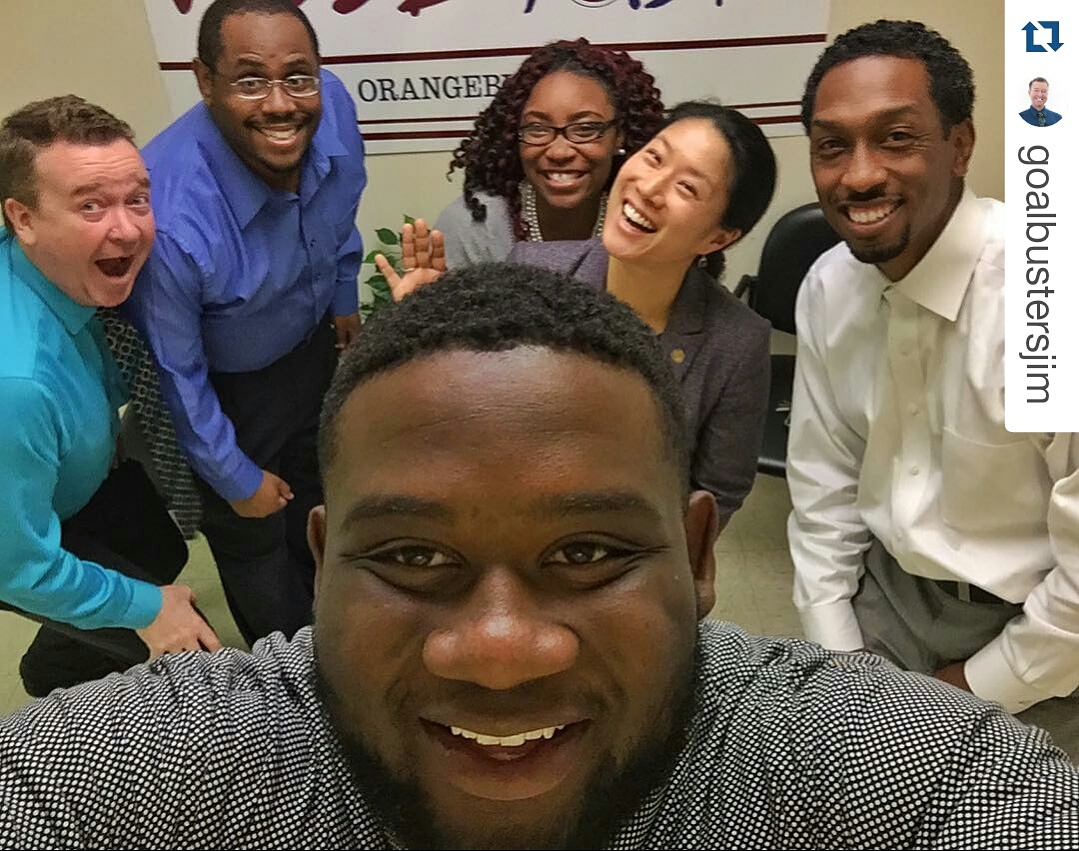
Jim and I and our friends at WSSB in Orangeburg, SC
Since the November 2016 election, people in public and community media have been speculating about the future of the Corporation for Public Broadcasting (CPB). This agency provides funding for public and community stations throughout the country through its Community Service Grant program and other special funding initiatives for infrastructure and collaborative projects.

Now, the Trump administration has announced its first pass budget that, to little surprise, zeroes out funding for the CPB, the National Endowment for the Arts, and the National Endowment for the Humanities.

I could go on about the politics of the elimination of funding. But not now. What I want to address is the very real impact of this potential loss on small, rural and minority stations.

First, an apology to my larger market station colleagues. I respect you and what you are doing to provide educational service to your communities. You invest local resources in Ready to Learn programs. You have some of the largest, and most under-resourced, teams of journalists in the country. You engage community leaders in civil discussion about local issues as wide ranging as racial profiling and restaurant reviews.

You will be fine.

CPB funding, for many large or medium size market stations, has become an increasingly small portion of their budgets. These stations may have survived elimination of other funding sources, such as state funding. Some have even explored what it might mean to withdraw from the Community Service Grant program. And I can confidently say that larger market stations have rallied their audiences to provide higher levels of voluntary support.

Some of my colleagues who have worked with only major market stations agree that eliminating funding to the Corporation for Public Broadcasting is a bad idea, but they are being practical. We can consolidate. We can raise the difference.

That's why I'm not really worried about you. I'm worried about the stations who can't do that.

The small but mighty KAWC team, 2016
(Steven Hennig is missing because he was taking the picture)
We work and have worked with small, rural and minority stations. We work with KAWC Colorado River Public Media, based in Yuma, Arizona, which provides two noncommercial programming streams to rural Arizona, including local coverage of real life on the border from a four person news team, and the only news service to some areas where cell phones still don't work.

We work with KGHR Navajo Public Radio, based at Greyhills Academy High School in Tuba City, Arizona, on the Navajo Nation, which serves as a community information board, sharing news about health fairs, home maintenance, public safety and other basic services that might otherwise go unnoticed.

We have worked in the past with KUYI Hopi Radio, licensed to The Hopi Foundation, one of the pioneers in Native American public media, which provides programming in the Hopi language and contributes to the protection and growth of the Hopi culture.

For all three of these stations, their CPB grant is a significant portion of their budget. It pays for programming that connects these remote communities to the rest of the world. It helps cover staff that keep the station running and provide a local voice. These stations are running with the bare minimum of staff to keep them going; the grant does not cover “fluff.”

In addition, these stations are not in communities with high resources. The idea of having the local audience bear the full cost is not realistic for these smaller stations. For instance, in a project funded by the CPB through Greater Public, we worked with four African-American licensed stations to try to build their local capacity for fundraising. Could we give these stations the tools to raise more money?

The answer, as you might expect, was “yes and no.” The stations did, to varying degrees, increase the amount of money raised, but not to the level of doubling or tripling their revenue. The communities that they served simply did not have the financial capacity to increase their giving dramatically. If faced with the loss of their CPB grant, they might be able to cut some expenses and generate a little more revenue, but not enough to continue.

So that begs the question...why do we need these small stations anyway? Wouldn't it be more efficient to just merge them into another larger station? Doesn't the internet provide the services these stations do? Couldn't we just have a national feed of NPR and PBS and call it done?

What would we lose if these small, rural and minority stations went away?

We lose the voices of these communities in national discussion. It doesn't work to ask people from these communities to go someplace else to share their opinions: that automatically makes them an outsider and immediately changes the nature of the conversation. We need to speak with people where they live to get their real perspectives.

We lose the connection within rural and small communities. Stations help residents in their communities stay connected. Particularly in radio, the station is often the only way to communicate with the whole community, not just about local events, but also about emergency situations. And the suggestion that everyone can get what they need through the internet? Well, internet access is not as universal as many in larger communities think, and what happens during a crisis when local internet might be down? In recent floods and hurricanes in the southeast, often the public radio or television station was the only source for updates.

We lose sight of issues that face people who live outside of metro areas. Let's face it: problems are different in major cities than they are in small towns and rural areas. For example, we are still dealing with getting cell phone service to some of these communities, when people in big cities complain about not having free WiFi. Stations have the ability to have issues moved to a larger stage that are simply foreign to metro audiences.

We lose the stories and rich histories of diverse cultures. You can't simply send a correspondent into a community for a day or two and expect them to understand the culture and way of life. There are so many stories that can only be crafted over time, and by someone who is a part of life there.

And we begin to ignore small, rural and minority communities and the issues that are important to them. By saying, “really, only large markets can have this service,” you tell people that they are not worth having a voice.

A colleague suggested that threats to federal support to public broadcasting might be a good thing for us. Like with the ACLU, the Southern Poverty Law Center, Planned Parenthood, and others, perhaps this is an opportunity for the public to rally and provide unprecedented levels of support. I worry that stations that really need the funding will not have the ability to access it.

Annie Lin (my mom), Mr. Rogers and me, circa 1971.
 I've been a public media supporter for a long time.
There will be much more discussion about this issue in the coming days, and, like in previous battles, I expect that many people will voice their support for public media. If you would like to do so, please visit Protect My Public Media to add your story. Also, contact your Representative and Senators regarding your position.


And find your local station and support them. They need all the help they can get.


We have worked with so many stations that deserve your support, but a special shout out to KAWC Colorado River Public Media, KGHR Navajo Public Radio, KUYI Hopi Radio, KXCI Tucson, Arizona Public Media, Arizona PBS, WSSB Orangeburg, WSNC Winston-Salem, WUVS Muskegon, KBBG Waterloo, Mountain Lake PBS, WGVU Grand Rapids, KCOS El Paso, Houston Public Media, KPFA Berkeley, WBAI New York, KNPB Reno, KUAC Fairbanks, and Wisconsin Public Television.

Labels

Alice Ferris (99) Jim Anderson (72) AFP (41) ACFRE (39) goalbusters (33) GoalBusters Consulting (31) CFRE (30) fundraising (30) Training (23) nonprofit (23) 100 days of gratitude (21) Association of Fundraising Professionals (18) Presentations (18) 100 days (17) 2009 (15) 2014 (15) AFP Conference (15) gratitude (15) AFPNAZ (14) Social Media (14) 2010 (13) 2013 (13) philanthropy (13) 2012 (11) Workshop (11) travel (11) 2011 (10) Flagstaff (9) How To (9) KAWC (8) Volunteer (8) arizona (8) thank you (8) 2008 (7) Facebook (7) Marketing (7) YouTube (7) 2017 (6) FAQ (6) Food (6) Public Radio (6) Storytelling (6) Tips (6) Video (6) LinkedIn (5) Lowell Observatory (5) Making the Ask (5) NFCB (5) Planning (5) Social Networking (5) Webinar (5) restaurants (5) rural fundraising (5) 2016 (4) Air Travel (4) Chinese New Year (4) Christmas (4) Donor (4) Hopi (4) KGHR (4) KUYI (4) Major Gifts (4) Native American (4) PBS (4) Planned Giving (4) Pledge Drive (4) Public Broadcasting (4) Public Television (4) SlideShare (4) Special Events (4) Stevenson (4) Video Production (4) board development (4) ethics (4) stewardship (4) 2015 (3) Arizona PBS (3) Brand (3) Canada (3) Capital Campaign (3) Chinese (3) Community (3) Development Staff (3) Donor Acquisition (3) Economy (3) Elf (3) Elves (3) Goals (3) HEEF (3) Haiku Deck (3) Health Care (3) Holiday (3) Jimisms (3) KAWC Colorado River Public Media (3) Manifesto (3) Mission (3) North Country HealthCare (3) Passion (3) Photography (3) Promotion (3) Research (3) Small Shops (3) Wisconsin (3) Year-End Giving (3) customer service (3) diversity (3) phoenix (3) prescott (3) resolutions (3) yuma (3) 2007 (2) 2020 (2) AFP TechKnow (2) Accreditation (2) Advancing Philanthropy (2) Alice's Restaurants (2) Baltimore (2) Books (2) Business Strategy (2) CFRE International (2) Chronicle of Philanthropy (2) Coaches (2) Commentary (2) Communication (2) Conference (2) Congress (2) Dancing (2) Dr. John H. Caskey III (2) Elta Foster (2) Foodspotting (2) Fundraising Campaign (2) Funny (2) Guiding Principles (2) Honor (2) Hopi Education Endowment Fund (2) House of Philanthropy (2) Humor (2) Immigrant (2) Jib Jab (2) KAET (2) NAU (2) Navajo (2) New Orleans (2) Partners (2) Plan (2) Press Release (2) Profile (2) Prospecting (2) Relationships (2) Respect (2) Resume (2) Reviews (2) Sanders (2) Schultz Fire (2) Singing (2) Strategic Planning (2) TechKnow (2) Toronto (2) Trust (2) Twitter (2) VIP (2) Values (2) Velvet Rope (2) Visionary (2) Vora Finacial (2) accountability (2) anniversary (2) appreciation (2) award (2) career satisfaction (2) change (2) checklist (2) code of ethics (2) crisis (2) crisis communication (2) cultivation (2) culture of philanthropy (2) development (2) development cycle (2) diverse communities (2) education (2) goal setting (2) habits (2) introspection (2) jobs (2) lapsed donors (2) las vegas (2) lessons (2) new year (2) personal (2) san diego (2) tripit (2) washington DC (2) 2019 (1) 30 day plan (1) 60 minutes (1) AFP Foundation Canada (1) AFP Meeting (1) AFPeeps (1) ALD (1) AWC (1) African American (1) Alexis de Tocqueville (1) Alpha Lambda Delta (1) Andrew Philips (1) Angry (1) Animoto (1) Anna LaBenz (1) Annagreta Jacobson (1) Apps (1) Arizona Daily Sun (1) Arizona University (1) Arizona Western College (1) Ask the Experts (1) Bequests (1) Bill Ferris (1) Blink (1) Bloomerang (1) Boot Camp (1) Boudros (1) Branding (1) Broadway (1) CAN-SPAM (1) CEO (1) CN Tower EdgeWalk (1) COVID (1) COVID-19 (1) CPB (1) Career Change (1) Case (1) Center on Philanthropy (1) Certified Fund Raising Executive (1) Charity Channel (1) Charlatans (1) Cheerleaders (1) Children (1) Chris Adams (1) Church (1) City Council (1) Cleveland (1) Cold Call (1) Colorado (1) Commission (1) Community Service (1) Compensation (1) Cook (1) Corporate Giving (1) Credential (1) Credentialing (1) Dan Coughlin (1) Data (1) Dating Game (1) Dave Tinker (1) Desert (1) Dharmesh Vora (1) Discovery Channel Telescope (1) Domestic Violence Shelter (1) Donald Sutherland (1) Donation (1) Douglas Adams (1) Downton Abbey (1) Dr. Carl Myers (1) Dr. William J. Rugg (1) EAA (1) Ed Renzi (1) Efficiency (1) Elevator Speech (1) Entrepreneur Magazine (1) Extraordinary Donor Journey (1) FM (1) FTC (1) Family (1) Fan Pages (1) Farm (1) Fast Food Nation (1) Feasibility Study (1) Feedback (1) Fight Club (1) Flagstaff Community Partnership (1) Flagstaff Shelter Services (1) Flood (1) Flowers (1) Food Bank (1) Foundations (1) Founders Medallion (1) Frances McAllister (1) Free (1) Fundraising Effectiveness Project (1) Gallup Q12 (1) Ginny Z. Berson (1) Girl Scouts (1) Giving USA (1) Global Philanthropic (1) Goldilocks Proposals (1) Granite Mountain Hotshots (1) Grant Writing (1) Grants (1) Grants Step by Step (1) Halifax (1) Hash House A Go Go (1) Hawaii (1) Healthcare (1) Hey Eleanor (1) Hiring (1) Hispanic (1) Homeless (1) Hopi Foundation (1) Hospital (1) Houston (1) IAIA (1) ICON (1) Identity (1) Ignorant (1) Immigration (1) In Kind (1) Indiana University (1) JC Patrick (1) JLB Project (1) January (1) Jetpack America (1) Jim Collins (1) Jimmy LaRose (1) KUAT (1) Kaleidoscope (1) Karla Williams (1) Ken Lain (1) KonMari (1) Kristin Taliaferro (1) KristinCoach (1) Latino (1) Lawrence Welk (1) Le Pavillon (1) Legacy (1) Living Social (1) Lodging (1) Los Angeles (1) Lotus of Siam (1) MIP (1) Mabel's on Main (1) Madison (1) Makeover Series (1) Malcolm Brett (1) Malcolm Gladwell (1) Margo Hudson (1) Marshall Rosenberg (1) Mary W. Black (1) Maslow's Hierarchy of Needs (1) McDonalds (1) Meeting Facilitation (1) Methodist (1) Mexican (1) Michael Nilsen (1) Middle East (1) Mike Geiger (1) Montessori in the Park (1) Mr Rogers (1) MySpace (1) NAFB (1) NANOE (1) NPR (1) NSU (1) NaNope (1) Nan Bain (1) Nepal (1) New York (1) News (1) Nietzche (1) Nonviolent Communication (1) Northern Arizona University (1) Organizational Readiness (1) Orlando (1) Oshkosh (1) Ottawa (1) PMDMC (1) PRPD (1) Pacifica (1) Pandemic (1) Parade (1) Partners in Recognition (1) Paul Helford (1) Philanthropist (1) Pittsburgh (1) Plenary Speaker (1) Politics (1) Porgy and Bess (1) Prezi (1) Proposal (1) Publications (1) Quentin Lee (1) Questions (1) Racial Profiling (1) Raku (1) Review (1) Rick Swanson (1) River City Grill (1) Riverwalk (1) Robbe Healey (1) Robert Kiyosaki (1) Ronald McDonald House (1) Rose Marie Ferris (1) SB1070 (1) SEO (1) SWOT (1) San Antonio (1) Saskatoon (1) Scottsdale (1) Service (1) Serving Your Community (1) Shared History (1) Soroptimists (1) Speaker (1) Sponsors (1) Sponsorship (1) Spring (1) Stephen Hawking (1) Stereotypes (1) Strategic Thinking (1) Super Size me (1) Suze Orman (1) Sweets Raku (1) Taco Trucks (1) Target Marketing (1) Team (1) Teamwork (1) Television (1) Teri Sanders (1) Texas (1) Thanksgiving (1) Tim Burcham (1) Timothy Sandoval (1) Toolkit (1) Tough (1) Tough Economy (1) Train (1) Tucson (1) Tweets (1) United President's Club (1) Vernon Kahe (1) WBAI (1) Watters Garden Center (1) Whitney Anderson (1) WikiHow (1) Wills (1) Winnipeg (1) Wisconsin Public Television (1) Women's March on Washington (1) Woodford Reserve (1) Yarnell (1) Yarnell Fire (1) Year in review (1) Year of the Sheep (1) Yellow Pages (1) accidental fundraiser (1) administration (1) adventures (1) assessment (1) astronomy (1) beliefs (1) birthday (1) board of governors (1) board service (1) breaking up (1) brochures (1) budget cuts (1) business practices (1) career (1) career development (1) cats (1) cliques (1) community radio (1) conversations (1) difficult people (1) dinner parties (1) donor focused (1) donor pyramid (1) election 2016 (1) end of relationship (1) essay (1) executive director (1) federal funding (1) firefighters (1) for profit (1) high school (1) hotels (1) ikigai (1) inspiration (1) jetpack (1) job seeking (1) keynote (1) leadership (1) lemons (1) loss (1) mentoring (1) millennials (1) monthly giving (1) motivation (1) multicultural (1) nomination (1) oklahoma city (1) organizational culture (1) outstanding professional (1) peoria (1) personal growth (1) potlucks (1) productivity (1) receptions (1) recognition (1) red flags (1) remembrance (1) sales (1) san francisco (1) scholarships (1) science (1) setbacks (1) star thrower (1) starfish (1) sustaining members (1) tempe (1) thirtysomething (1) three cups of tea (1) to do (1) transformational (1) vlog (1) volunteers (1) wildland fire (1) winslow (1)